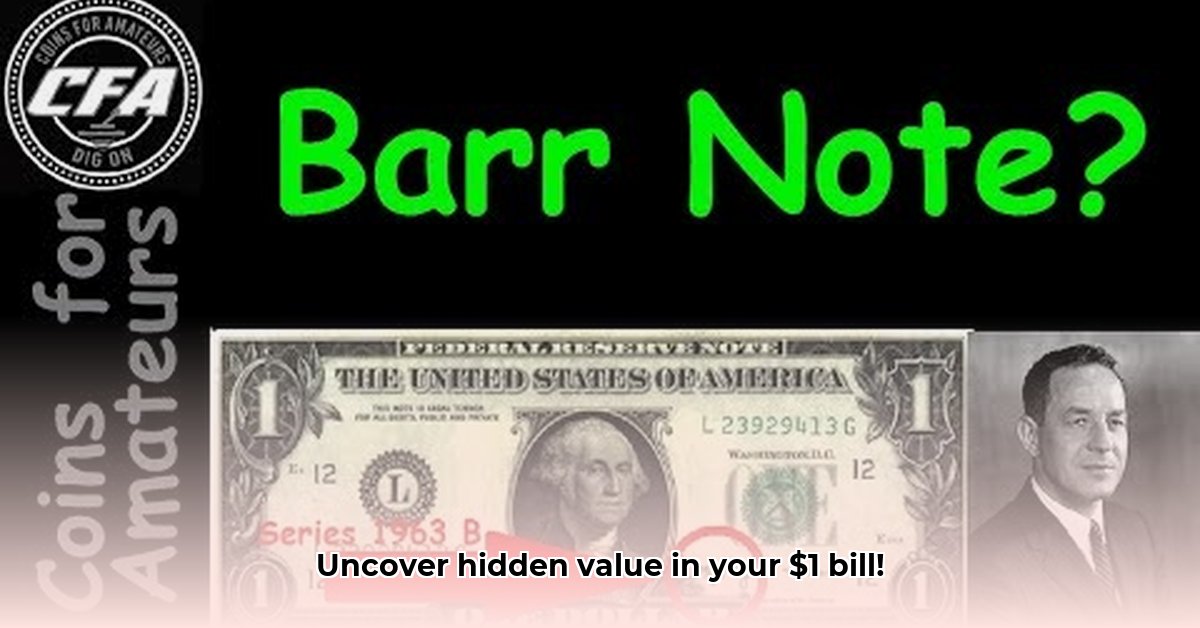
The 1963 B one-dollar bill, a seemingly ordinary piece of currency, can hold surprising value for collectors. This guide provides a comprehensive overview of its worth, encompassing grading, identifying rare features, and navigating the market. Whether you're a seasoned numismatist or a curious beginner, this guide will equip you with the knowledge to assess and potentially profit from this collectible.
Understanding the 1963 B $1 Bill's Value
The value of a 1963 B one-dollar bill isn't fixed; it's a dynamic interplay of condition, rarity, and market demand. A pristine, uncirculated bill will command a significantly higher price than one showing significant wear. Furthermore, specific features can dramatically increase its value.
Key Factors Affecting Value:
- Grade (Condition): The most significant factor. A higher grade (e.g., Gem Uncirculated) indicates better condition and hence, higher value.
- Star Notes: Reprint bills marked with a star (*) replacing notes with printing errors. These are considerably rarer.
- Fancy Serial Numbers: Serial numbers with repeating digits, patterns, or other visually appealing sequences. These are highly sought after by collectors.
- Market Demand: Fluctuations in collector interest impact prices.
Think of it like a classic car—a pristine, low-mileage model fetches a much higher price than a rust-bucket. Similarly, the condition and unique features of your 1963 B bill directly influence its value. Have you ever wondered what makes some bills worth more than others? The answer lies in the details.
Grading Your 1963 B $1 Bill: A Step-by-Step Guide
Professional grading services, such as PCGS (Professional Coin Grading Service) and NGC (Numismatic Guaranty Corporation), utilize the Sheldon Scale (1-70) to assess condition. However, a preliminary self-assessment can help you understand your bill's potential value.
Visual Assessment:
- Examine for Damage: Carefully inspect for tears, creases, stains, or any other imperfections. Even minor flaws can significantly reduce the grade.
- Assess Print Quality: Look for sharpness of images and clarity of ink. Crisp, vibrant printing indicates better condition.
- Check Serial Numbers: Note if the serial number exhibits any repeating digits, patterns, or other intriguing sequences.
- Identify Star Notes: Check for a star (*) after the serial number, indicating it's a replacement bill.
Remember: A visual inspection only provides an estimate. Professional grading offers a standardized, objective assessment.
Rare Features: Maximizing Your Bill's Potential
As mentioned, certain features can substantially elevate a 1963 B $1 bill's value beyond its condition. These include:
- Star Notes: These command premium prices due to their rarity.
- Fancy Serial Numbers: Certain numerical patterns or sequences are highly desirable amongst collectors. These can significantly enhance value, sometimes exceeding that of a star note.
Do you have a 1963 B bill with crisp print and a unique serial number? The value could surprise you. These distinctive features play a crucial role in determining its worth and marketability.
Determining Your Bill's Worth: Resources and Strategies
Several avenues exist for obtaining a value estimate for your 1963 B $1 bill.
- Online Resources: Websites specializing in paper money often provide price guides based on past sales data. These provide a starting point but remember market volatility and that these are just estimates.
- Professional Appraisal: For an accurate valuation, consult a reputable numismatist or professional grading service. They can provide a detailed assessment considering all factors influencing value.
It's crucial to understand that online resources and price guides offer estimates, not definitive valuations. A professional appraisal provides the most accurate assessment.
Investing in 1963 B One Dollar Bills: A Balanced Perspective
While high-grade 1963 B bills with rare features can appreciate over time, investing in them carries inherent risks.
Potential Risks:
- Market Volatility: The collectibles market fluctuates.
- Authentication Challenges: Verifying authenticity is paramount.
- Storage and Preservation: Improper storage can damage the bill, reducing its value.
Diversification is key. Don't center your investment portfolio solely on one type of currency. Careful research and due diligence are vital. Think of it as any other investment strategy: mitigating risk is crucial.
Conclusion: Unlocking the Potential of Your 1963 B Bill
The 1963 B one-dollar bill presents a unique opportunity for collectors and investors. By understanding the factors influencing its value—grade, condition, and potentially rare features —you can accurately assess and potentially profit from this historical piece of currency. Remember careful research and due diligence are essential when dealing with any collectible.